
Scraper Web: What It Is, How It Works, and Why Your Agency Should Care in 2026
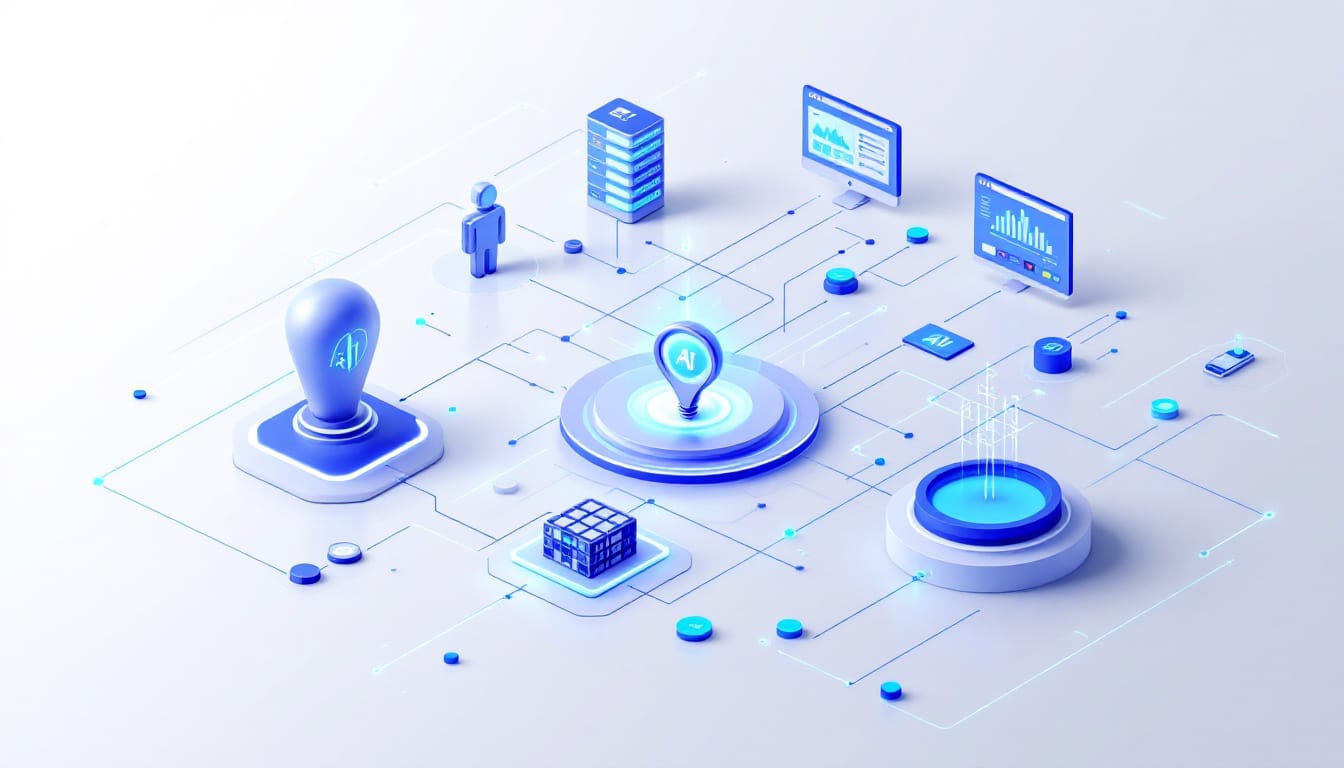
Web scraping is the automated process of extracting data from websites — pulling structured information (prices, listings, content, rankings) from web pages at scale, without manually copying anything. It’s used by SEO professionals, data analysts, competitive intelligence teams, and AI training pipelines alike. If you’re an agency trying to understand the web at scale, scraper web tools are foundational infrastructure — not optional extras.
Key Takeaways
- Web scraping automates the extraction of publicly available data from websites, enabling agencies to gather competitive intelligence, track rankings, and monitor content at scale.
- Modern scraper web tools handle JavaScript-rendered pages, anti-bot protections, and dynamic content — not just static HTML.
- SEO agencies use web scraping for keyword gap analysis, backlink prospecting, competitor content audits, and SERP monitoring — all tasks that would take hours manually.
- AI search engines (ChatGPT, Perplexity, Google AI Overviews) are trained on scraped web data — understanding this pipeline explains why structured, citation-ready content ranks better in AI-generated answers.
- White-label SEO providers like Agency Stack use autonomous AI systems that scrape, analyse, and act on web data continuously — giving boutique agencies enterprise-grade intelligence without the headcount.
What exactly is a scraper web tool?
A web scraper is software that sends HTTP requests to web pages, parses the returned HTML (or JavaScript-rendered DOM), and extracts specific data fields — prices, headlines, URLs, phone numbers, review counts, whatever you need. The “scraper web” framing simply refers to the broader practice of scraping the web, as opposed to scraping a single site.
The simplest scrapers work on static HTML: fetch a page, read the DOM, pull the data. But most modern websites render content via JavaScript frameworks (React, Vue, Angular), which means a basic HTTP request returns a near-empty shell. Advanced scrapers use headless browsers — Puppeteer, Playwright, Selenium — to execute JavaScript before extracting anything. This distinction matters enormously when you’re scraping SERP data, social platforms, or e-commerce sites that load content dynamically.
There are also scraping APIs that sit between you and the raw web: services like Apify, Bright Data, and ScraperAPI manage rotating proxies, CAPTCHA solving, and browser fingerprinting for you. According to AIMultiple Research, web scraping tools and services represent a multi-billion-dollar market globally, with adoption growing fastest in e-commerce, finance, and digital marketing.
How does web scraping actually work under the hood?
The process follows four steps: request, render, parse, extract. A scraper sends a GET request to a target URL, optionally renders the page in a headless browser, parses the HTML using a library like BeautifulSoup (Python) or Cheerio (Node.js), then extracts target elements using CSS selectors or XPath expressions.
For most SEO use cases, you’re working with one of three patterns. First, crawling: recursively following links across a domain to map its full structure — what Screaming Frog does when it audits a site. Second, targeted extraction: pulling specific data points from a defined list of URLs — grabbing title tags, meta descriptions, H1s, word counts across 500 competitor pages. Third, SERP scraping: querying Google or Bing programmatically and parsing the result pages to see who ranks where, what featured snippets look like, and what “People Also Ask” questions appear.
Anti-scraping protections complicate all of this. Cloudflare, rate limiting, IP bans, honeypot links, and CAPTCHAs are deployed by sites that don’t want their data scraped at scale. Sophisticated scrapers rotate user agents, introduce randomised delays, distribute requests across residential proxy networks, and use browser fingerprint randomisation to avoid detection. It’s a genuine arms race — and one reason many agencies outsource their data infrastructure rather than building it in-house.
Why do SEO agencies rely on web scraping?
SEO is fundamentally a data problem. You’re competing against other websites for finite ranking positions, and winning requires understanding your competitors’ content strategy, backlink profile, technical structure, and keyword targeting — at a level of granularity that’s impossible without automated data collection.
Here’s where scraping shows up in a typical agency workflow. Keyword gap analysis: scrape the top 20 ranking pages for a target keyword, extract their heading structure and semantic terms, identify topics your client’s content is missing. Backlink prospecting: scrape industry directories, resource pages, and competitor backlink lists to build outreach targets. Content auditing: crawl a client’s site at scale to surface thin pages, duplicate titles, missing meta descriptions, broken internal links. SERP feature tracking: monitor whether your client’s pages appear in featured snippets, People Also Ask boxes, or AI Overviews — and reverse-engineer what structure triggers those placements.
If you’re evaluating whether to build this capability in-house or partner with a specialist, the SEO Reseller vs In-House SEO Team breakdown is worth reading — it addresses exactly the build-vs-buy decision that most growing agencies face around technical SEO infrastructure.
How do AI search engines use scraped web data?
This is where the topic gets directly relevant to appearing in AI-generated answers — one of the most valuable distribution channels in 2026. AI search engines like ChatGPT, Perplexity, and Google’s AI Overviews are trained on (and retrieve from) scraped web content. They extract answers from pages that are structured to be machine-readable: direct answers near the top, question-format headings, FAQ sections with H3/P pairs, and clean citation formatting.
When an AI engine crawls or retrieves your client’s content, it’s essentially running a scraper pass — pulling structured text, parsing heading hierarchy, identifying the most extractable answer chunks. Pages optimised for AEO (Answer Engine Optimisation) are, at their core, pages engineered to be scraped well. Short, direct answers under descriptive headings. Bullet points that stand alone as facts. FAQ sections formatted so each question-answer pair is a discrete, extractable unit.
According to BrightEdge Research, AI-generated answers now appear on a significant share of commercial queries, and the pages cited share common structural patterns: early direct answers, structured headings, and credible external citations. Understanding how scrapers parse content tells you exactly how to format content for AI citation.
This is the part most agencies’ LinkedIn pitches miss entirely. Prospects don’t want to hear about AI execution in the abstract — they want to see pages that actually appear in AI Overviews and Perplexity answers. That’s proof. It’s more persuasive than any deck.
What are the legal and ethical boundaries of web scraping?
This depends on jurisdiction, the target site’s terms of service, and what you’re scraping. The short version: scraping publicly available data is generally permissible in most contexts, but scraping behind authentication walls, violating explicit ToS prohibitions, or scraping personal data without consent creates legal exposure.
In Australia, the Privacy Act 1988 governs how personal data collected through automated means can be stored and used. In the US, the Computer Fraud and Abuse Act (CFAA) has been applied to scraping cases, though the 2022 hiQ v. LinkedIn ruling affirmed that scraping publicly accessible data doesn’t violate the CFAA. In the UK, GDPR-derived obligations under the UK Data Protection Act apply to any personal data collected through scraping.
For SEO use cases — scraping SERPs, competitor pages, public business listings — the legal risk is low when you’re not collecting personal data and you’re respecting rate limits that avoid server disruption. But terms of service violations are a separate issue from legality: Google’s ToS explicitly prohibits scraping its SERPs without authorisation, which is why most agencies use authorised APIs (Google Search Console, DataForSEO) for SERP data rather than raw scraping.
The practical answer for agencies: use authorised data sources where they exist (GSC, GA4, licensed SERP APIs), and reserve raw scraping for competitor page content where no authorised API is available.
How can boutique agencies use scraper web capabilities without building them in-house?
Most boutique agencies shouldn’t build scraping infrastructure from scratch. The tooling is genuinely complex (headless browsers, proxy rotation, parsing pipelines, data storage), the maintenance burden is ongoing, and the real value is in what you do with the data — not the plumbing that collects it.
The practical options are: licensed SEO platforms (Ahrefs, Semrush, Moz) that deliver pre-scraped data via API; specialist scraping services (Apify, Bright Data, Oxylabs) for custom data collection needs; or white-label SEO providers that handle the entire data-to-delivery pipeline, including scraping, analysis, content production, and reporting under your agency’s brand.
The last option is what makes sense for agencies billing $5k–$25k per client who need execution capacity without the headcount. You’re not selling “we have a scraper” — you’re selling rankings, content, and measurable search visibility. The scraping is just the substrate. If you’re assessing what software and service infrastructure your agency actually needs, the Marketing Agency Software guide covers the full stack worth considering.
At Agency Stack, the autonomous AI fleet runs continuous scraping and analysis across clients’ competitive sets — tracking SERP movements, identifying content gaps, monitoring technical health — and delivers that intelligence as white-labelled SEO execution. Agencies get the output without managing the infrastructure. That’s the execution proof that converts prospects who’ve already heard too many pitches.
Frequently Asked Questions
What is the difference between web scraping and web crawling?
Web crawling is the process of systematically following links to discover and index pages — it’s what search engine bots do. Web scraping is the extraction of specific data from those pages once they’re found. In practice, most SEO tools combine both: crawl a site’s structure, then scrape data from each discovered page.
Is web scraping legal in Australia?
Scraping publicly accessible data is generally legal in Australia, provided you’re not collecting personal data in ways that violate the Privacy Act 1988 and you’re not circumventing technical access controls. Scraping behind login walls or in ways that disrupt a site’s servers introduces legal risk. Always review a site’s terms of service before scraping it at scale.
What tools are commonly used for web scraping?
Common tools include Python libraries (BeautifulSoup, Scrapy), headless browser frameworks (Playwright, Puppeteer), no-code tools (Web Scraper Chrome extension, Octoparse), and commercial scraping APIs (Apify, Bright Data, ScraperAPI). The right choice depends on whether the target site requires JavaScript rendering and how frequently you need to collect data.
How do SEO agencies use web scraping to improve client rankings?
Agencies use scraping to audit competitor content at scale, identify keyword gaps, track SERP feature placements, monitor backlink profiles, and surface technical issues across large site crawls. This data informs content strategy, link building targets, and on-page optimisation — all of which directly affect ranking performance.
Why does structured content perform better in AI-generated answers?
AI search engines parse web pages similarly to scrapers — they extract discrete content units from structured HTML. Pages with direct answers near the top, question-format headings, and FAQ sections formatted as H3/P pairs are easier for AI systems to parse and cite. Structuring content for scrapability is effectively the same as structuring it for AI citation.
Can white-label SEO providers handle web scraping and data analysis on my behalf?
Yes. White-label providers like Agency Stack run automated data collection and analysis pipelines on your clients’ behalf, delivering insights and execution under your brand. This removes the need to build and maintain scraping infrastructure in-house, while giving your agency access to enterprise-grade competitive intelligence at a fraction of the cost of hiring specialists.
How does web scraping support content production at scale?
Scraping competitor content reveals the topics, structures, and semantic terms that top-ranking pages use — informing briefs that target gaps rather than duplicating what already ranks. Combined with automated content pipelines, this lets agencies produce dozens of well-targeted articles per month without briefing writers from scratch on each one.
What’s the difference between using a scraping API and building your own scraper?
Building your own scraper gives you full control over targeting, scheduling, and data structure, but requires ongoing engineering maintenance — especially as target sites update their anti-bot protections. Scraping APIs handle proxy rotation, CAPTCHA solving, and browser fingerprinting for you, trading some flexibility for significantly reduced maintenance overhead. For most agency use cases, an API is the more practical choice.
For expert Whitelabel Digital Marketing Services guidance in the USA, contact Agency Stack.
Written by the Agency Stack team — white-label SEO and digital marketing professionals supporting boutique agencies across the USA and beyond.