
Facebook Advertising Management: What Agencies Need to Know in 2026
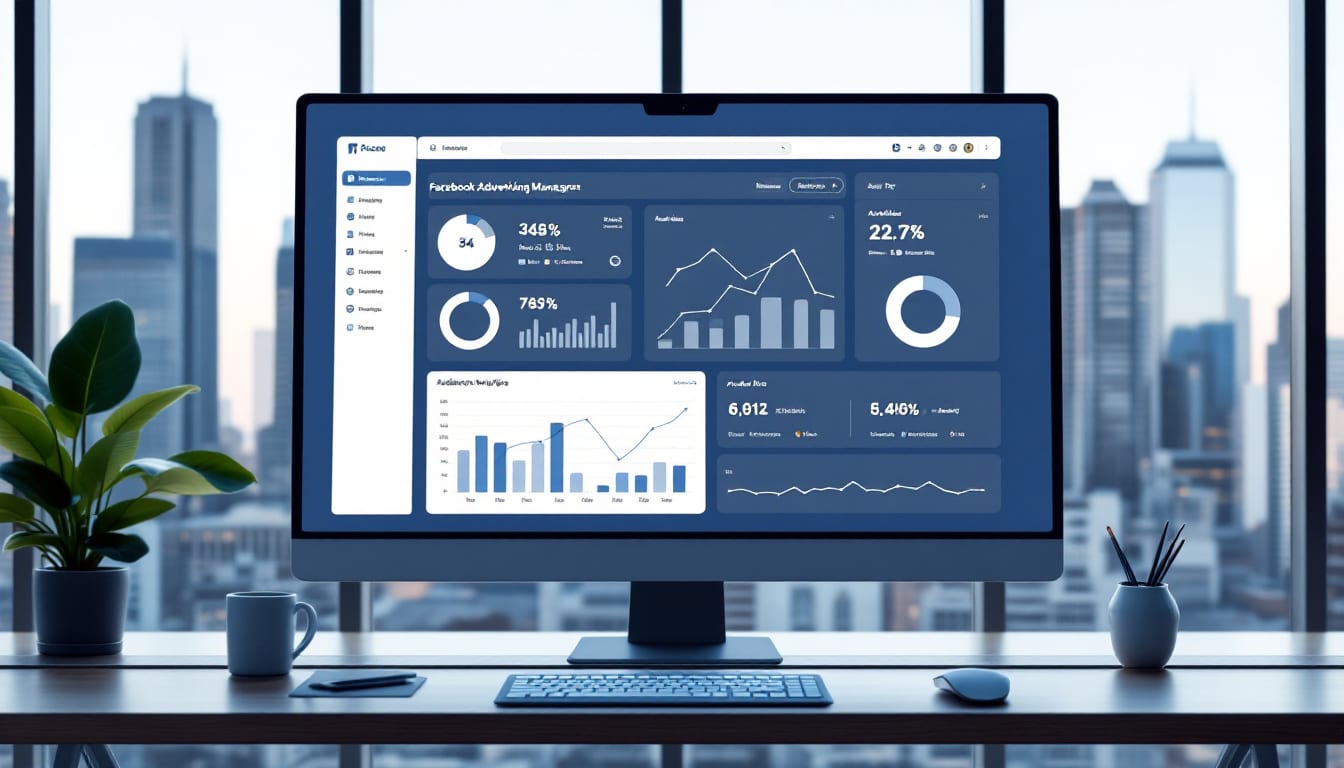
Facebook advertising management is the process of planning, building, optimising, and reporting on paid campaigns across Meta’s advertising platforms — including Facebook, Instagram, and the Audience Network. Done well, it turns a client’s ad budget into measurable leads, sales, and brand growth. Done poorly, it burns money fast and loses clients faster.
- Facebook advertising management covers the full campaign lifecycle: strategy, audience targeting, creative production, bid optimisation, and performance reporting — not just hitting “publish” on an ad.
- Meta’s Ads Manager handles campaign setup and delivery, but the strategic layer — knowing what to test, who to target, and how to interpret results — is where agencies either earn or lose their retainer.
- According to Statista, Meta generated over $130 billion USD in advertising revenue in 2023, making it one of the world’s largest advertising platforms — and one of the most competitive places to spend a client’s budget.
- White-label Facebook advertising management lets boutique agencies offer expert paid social services without hiring an in-house paid media team.
- AI-driven campaign management — automated bidding, creative testing, and audience optimisation — is rapidly replacing manual campaign management for agencies that want to scale without proportional headcount growth.
What Does Facebook Advertising Management Actually Include?
Facebook advertising management isn’t a single task — it’s an ongoing operational function that spans strategy, execution, and analysis. At its core, it means taking responsibility for a client’s entire Meta paid media presence, from audience research to monthly reporting.
That includes account structure (campaign, ad set, and ad level organisation), audience targeting (custom audiences, lookalikes, interest layers), creative strategy and production (static images, video, carousel, and dynamic ads), bid strategy selection (cost cap, bid cap, lowest cost), conversion tracking via the Meta Pixel and Conversions API, A/B testing across creatives and audiences, and performance reporting that ties ad spend to actual business outcomes. Each of these is a discipline in itself. A client billing $5,000 per month for Facebook management expects all of them to be handled competently — and the ones billing $25,000 per month expect them to be handled expertly, with proactive recommendations rather than reactive explanations.
The agencies that retain clients longest aren’t the ones running the cheapest CPMs. They’re the ones who catch a declining ROAS before the client notices, who test new creative angles before the old ones fatigue, and who connect campaign data to real revenue conversations. That operational rigour is what separates a managed service from a set-and-forget ad account.
How Does Meta’s Ads Manager Work for Agencies?
Meta’s Ads Manager is the central platform for creating, managing, and reporting on Facebook and Instagram campaigns. Agencies access client accounts either through Business Manager (now Meta Business Suite) or via partner access through an agency’s own Business Manager account.
The campaign structure runs three levels: Campaign (objective), Ad Set (audience, budget, schedule, placements), and Ad (creative). Choosing the right campaign objective matters more than most agencies admit — a Traffic campaign optimises for link clicks, not purchases. Running a Traffic objective for an e-commerce client who wants sales is one of the most common (and costly) mistakes in agency management. Meta’s machine learning optimises for whatever you tell it to optimise for. If you tell it to find people who click, it finds people who click — not necessarily people who buy.
For agencies managing multiple clients, Business Manager is non-negotiable. It lets you manage separate ad accounts, pixels, pages, and catalogues under one roof, with granular user permissions. You can grant clients view access without giving them the ability to accidentally pause campaigns or change budgets at 11pm on a Friday (which, if you’ve managed enough clients, you know happens).
Agency workflows typically include regular creative refresh cycles (every 2-4 weeks to combat creative fatigue), structured testing protocols, and scheduled reporting cadences. The operational overhead of doing this manually across 10+ client accounts is substantial — which is exactly why white-label management and AI-assisted workflows are becoming the default, not the exception. If you’re evaluating how this fits into your broader agency toolkit, our Marketing Agency Software guide breaks down the platforms worth considering.
What Are the Most Effective Facebook Ad Targeting Strategies?
The most effective targeting strategies in 2026 combine Meta’s machine learning with smart audience architecture — not overly narrow interest stacks that restrict delivery. Meta’s algorithm has improved dramatically; giving it room to optimise often outperforms manual audience micro-targeting.
The targeting approaches that consistently perform for agency clients fall into three buckets. First, custom audiences built from first-party data: customer lists, website visitors (via Pixel), video viewers, and lead form engagers. These are your warmest audiences and typically deliver the best conversion rates. Second, lookalike audiences built from high-value customer segments — not your entire email list, but your top 20% of customers by lifetime value. Meta finds people who look like your best customers, not just any customers. Third, broad targeting with strong creative — letting Meta’s algorithm do the heavy lifting by targeting by age and location only, and relying on the creative itself to self-select the right audience. This approach has become increasingly effective as Meta’s AI has matured.
What doesn’t work as well as it once did: overly granular interest stacking, narrow geographic exclusions, and rigid demographic filters. The platform has shifted toward rewarding creative quality and relevance signals over precise targeting inputs. According to Meta Business Insights, campaigns that allow broader delivery consistently see improved cost efficiency versus heavily restricted ad sets.
The targeting strategy that’s right for any given client depends on their funnel stage, product price point, and existing audience assets. A local trades business needs different targeting logic than a national e-commerce brand — and a good agency knows not to apply the same template to both.
How Do You Measure Facebook Advertising Performance?
The right metrics depend entirely on the campaign objective and the client’s actual business goals. Cost per result matters, but result needs to be defined before the campaign launches — not after the client asks why the numbers look odd.
For lead generation campaigns, the core metrics are Cost Per Lead (CPL), lead quality rate (what percentage of leads convert to sales conversations), and total leads delivered against target. For e-commerce, it’s Return on Ad Spend (ROAS), Cost Per Purchase, and revenue attributed to paid social. For awareness and reach campaigns, it’s reach, frequency, video completion rates, and brand lift (where measurable). The mistake many agencies make is reporting on platform metrics (impressions, clicks, CTR) when clients actually care about business metrics (leads, sales, revenue). Vanity metrics make for comfortable reports; they don’t make for client renewals.
Attribution is where it gets genuinely complex. Meta’s native attribution competes with Google Analytics, CRM data, and in some cases, client intuition (“we haven’t seen more calls”). A multi-touch attribution model, even a simple one, gives clients a more honest picture than either platform’s single-source view. The Conversions API (CAPI) integration has improved Meta’s ability to track conversions in a privacy-first environment — it’s now effectively mandatory for any client with meaningful conversion volume, not optional.
Should Your Agency Offer White-Label Facebook Advertising Management?
If you’re a boutique agency billing clients for paid social but stretching a small team across too many accounts, white-label Facebook management is worth serious consideration. It’s not about outsourcing quality — it’s about adding execution capacity without adding headcount costs.
The white-label model works like this: a specialist partner manages the client’s campaigns under your agency’s brand. Your client sees your agency’s name on reports, your account manager in their inbox, and your branding on everything. The specialist partner’s work stays invisible. You bill the client your rate; you pay the partner their rate; you keep the margin. This is exactly how Agency Stack operates — white-label digital marketing services that sit behind your agency’s brand, giving you the capacity to take on more clients without the risk of hiring specialists before you’ve won the work to justify it.
The agencies that struggle with white-label arrangements are usually the ones who treat it as a last resort (when a client is already unhappy) rather than a deliberate growth strategy. The ones that win with it build white-label partnerships into their service model from the start, so they can confidently take on paid social clients knowing the execution is covered. This parallels the decision many agencies face with SEO — if you’re weighing the build-vs-partner question, our piece on SEO Reseller vs In-House SEO Team works through the same framework.
How Is AI Changing Facebook Advertising Management for Agencies?
AI has already changed campaign management at the platform level — Meta’s Advantage+ campaigns, automated placements, and dynamic creative optimisation are all AI-driven. The shift happening now is AI moving into the agency layer: strategy, creative briefing, audience architecture, and performance analysis.
For agencies managing 10-50 client accounts, AI-assisted workflows mean tasks that once took hours — building audience segments, drafting creative briefs, generating performance summaries — now take minutes. The output quality, when the AI is properly trained on client context, is comparable to a competent junior media buyer. And where it falls short, a senior strategist’s review catches it quickly. The net effect is that agencies can manage more accounts without proportional staff growth. That’s the core value proposition.
The agencies resisting AI-assisted management are typically worried about quality, not cost. That’s a legitimate concern — but the question isn’t “AI or human?” It’s “which tasks benefit from AI speed, and which require human judgement?” Creative strategy, client relationships, and budget recommendations require human judgement. Audience segmentation, report generation, and A/B test structuring are well-suited to AI assistance.
This matters for how Agency Stack positions its service. LinkedIn outbound and partnership networks work — but agencies evaluating a white-label partner today want to see the AI execution in action, not a slide deck about it. Showing a live campaign workflow, AI-generated reporting output, or real client results closes faster than any pitch deck. Proof of capability, not claims about capability, is what converts sophisticated agency buyers in 2026.
Frequently Asked Questions
What is Facebook advertising management?
Facebook advertising management is the ongoing process of planning, building, optimising, and reporting on paid campaigns across Meta’s platforms, including Facebook and Instagram. It covers everything from account structure and audience targeting to creative testing and conversion tracking — handled either in-house or by a specialist agency partner.
How much does Facebook advertising management cost?
The answer varies depending on scope, account complexity, and whether you’re managing in-house or outsourcing. Agency retainers for Facebook management typically range from $1,000 to $5,000 per month for small-to-medium accounts, with larger or higher-spend accounts commanding more. White-label partners like Agency Stack allow agencies to price competitively while maintaining healthy margins.
What is the difference between Facebook Ads Manager and Meta Business Suite?
Facebook Ads Manager is the dedicated campaign creation and management tool — it’s where you build ad sets, set budgets, define audiences, and monitor campaign performance. Meta Business Suite is the broader account management hub, covering Pages, messaging, and business settings alongside some advertising functions. Agencies doing serious campaign work primarily live in Ads Manager.
How long does it take to see results from Facebook advertising?
Most campaigns need 2-4 weeks to exit Meta’s learning phase, during which the algorithm is optimising delivery. Meaningful performance data — enough to make informed optimisation decisions — typically takes 4-6 weeks. Clients expecting significant results in the first week are often working with unrealistic expectations, and setting that context upfront is part of good agency management.
What is white-label Facebook advertising management?
White-label Facebook advertising management means a specialist partner manages a client’s campaigns on behalf of an agency, under that agency’s brand. The end client sees the agency’s name on reports and communications; the specialist partner’s involvement stays behind the scenes. It allows agencies to offer paid social services without building an in-house paid media team.
How do you prevent ad fatigue on Facebook?
Ad fatigue happens when the same audience sees the same creative too many times — frequency rises, CTR drops, and cost per result climbs. The standard prevention approach is a regular creative refresh cycle (every 2-4 weeks for active campaigns), combined with audience rotation and creative variation across formats. Monitoring frequency at the ad set level, not just the campaign level, gives you earlier warning signs before performance deteriorates significantly.
What is the Meta Conversions API and why does it matter?
The Conversions API (CAPI) is Meta’s server-side tracking solution that sends conversion data directly from your server to Meta, bypassing browser-based tracking limitations like ad blockers and iOS privacy changes. It’s now effectively a necessity for any advertiser serious about accurate conversion measurement. Without it, a significant proportion of conversions go unattributed, which makes Meta’s algorithm optimise on incomplete data — leading to higher costs and worse results.
Can AI replace human Facebook advertising managers?
AI can automate significant portions of campaign management — audience segmentation, bid optimisation, report generation, and creative testing — but it doesn’t replace the strategic and client-relationship layer that experienced human managers provide. The most effective agency model in 2026 uses AI to handle repeatable execution tasks at scale, with human oversight focused on strategy, client communication, and complex performance decisions.
For expert white-label digital marketing services in the USA, contact Agency Stack.
Written by the Agency Stack team — white-label digital marketing professionals helping boutique agencies deliver expert results at scale.