
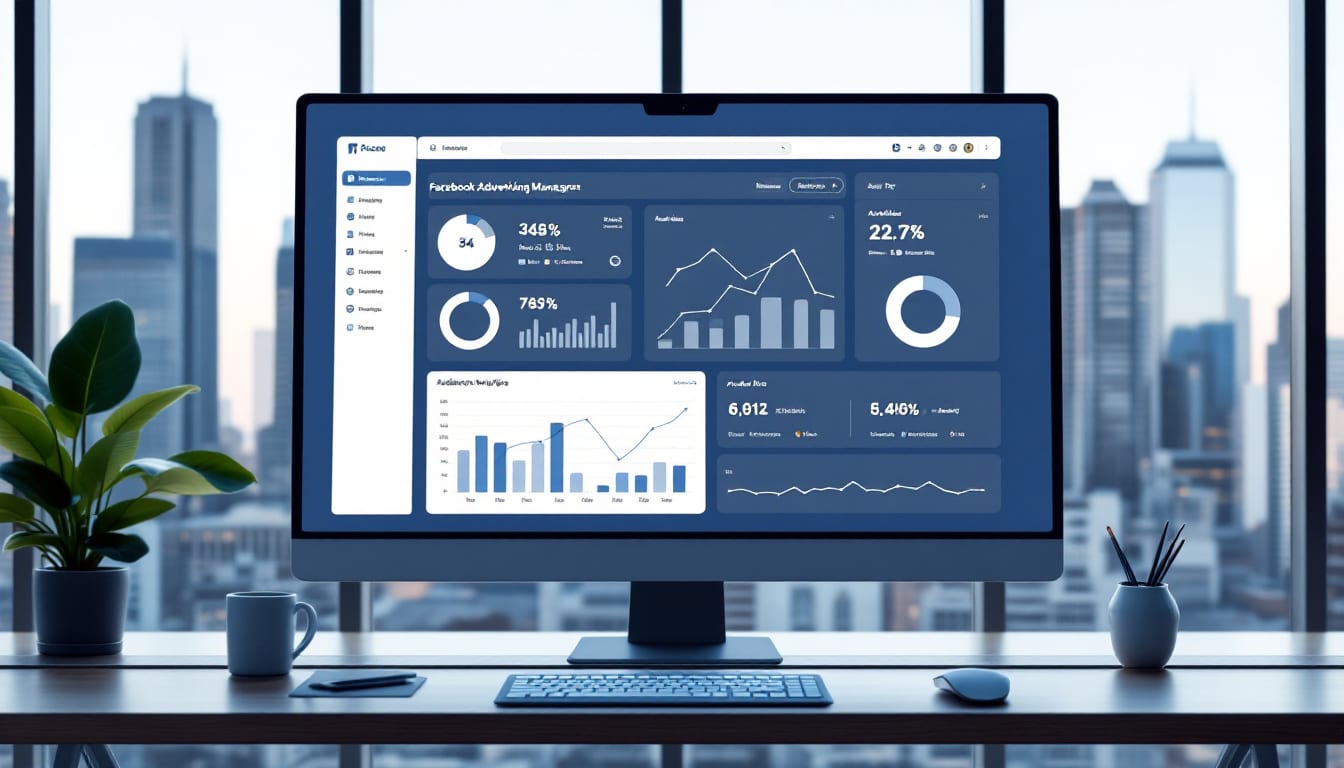
Facebook advertising management is the process of planning, building, optimising, and reporting on paid campaigns inside Meta’s Ads Manager platform on behalf of a business or client. Done well, it drives measurable leads, sales, and brand reach. Done poorly — or spread too thin across too many client accounts — it burns budget and erodes trust fast.
- Facebook Ads Manager is Meta’s native platform for creating and managing paid campaigns across Facebook, Instagram, Messenger, and the Meta Audience Network.
- Effective Facebook advertising management requires ongoing creative testing, audience segmentation, bid strategy adjustments, and performance reporting — not a set-and-forget approach.
- Boutique agencies managing Facebook ads for multiple clients need either dedicated in-house specialists or a white-label partner who can execute at scale without the overhead.
- According to Statista, Meta generated over $130 billion USD in advertising revenue in 2023, making it one of the most dominant paid media channels available to marketers worldwide.
- White-label Facebook advertising management lets agencies bill clients for expert execution without hiring, training, or managing a full paid media team.
What does Facebook advertising management actually involve?
Facebook advertising management covers every layer of a paid campaign from strategy through to optimisation. It’s not just turning ads on. You’re making decisions about audiences, placements, creative formats, bidding strategies, and budget allocation — and then adjusting all of it based on what the data shows.
At a campaign level, this means setting up the right campaign objective (conversions, traffic, lead generation, reach), structuring ad sets around defined audiences, and writing or briefing ad creative that stops the scroll. The work doesn’t stop at launch. A well-managed account gets reviewed regularly — at minimum weekly — to catch underperforming ad sets, scale winners, and test new angles before ROAS starts sliding.
For agencies managing multiple client accounts, the complexity multiplies. Each client has different goals, different audiences, different creative constraints, and different reporting expectations. That’s where the operational load becomes the real challenge — not the platform knowledge, but the execution capacity to do it all properly across five, ten, or twenty accounts simultaneously.
How does Meta Ads Manager work?
Meta Ads Manager is the central platform where campaigns are built, monitored, and optimised. It operates on a three-tier structure: campaigns set the objective, ad sets define the audience and budget, and ads contain the actual creative. Each layer has its own settings and levers.
At the campaign level, you choose what you want Meta’s algorithm to optimise for — leads, purchases, video views, link clicks, and so on. This choice matters more than most advertisers realise. Meta’s algorithm is remarkably good at finding people likely to take your chosen action, but only if you give it a clear signal and enough conversion volume to learn from (roughly 50 conversion events per ad set per week is the threshold for the algorithm to exit the learning phase effectively).
Ad sets let you define your audience by interest, behaviour, demographic, custom audience (website visitors, email list uploads), or lookalike audience built from existing customers. Placement targeting lets you choose between Facebook Feed, Instagram Feed, Stories, Reels, Messenger, and the Audience Network — or you can let Meta’s Advantage+ Placements do the heavy lifting algorithmically.
Ads sit at the base of the structure. This is where creative format matters: single image, video, carousel, collection, or dynamic ads. Meta’s Advantage+ Creative suite now auto-tests variations, so feeding the platform high-quality creative assets gives the algorithm more to work with. A strong agency workflow produces multiple creative variants per campaign, tests them systematically, and kills underperformers before they drain budget.
What are the most effective Facebook ad strategies for lead generation?
Lead generation on Facebook works best when you match the ad format and audience temperature to where the prospect sits in their decision journey. Cold audiences need education and trust-building. Warm audiences — retargeting website visitors or video viewers — respond to more direct offers.
For top-of-funnel, video ads consistently outperform static images for building awareness at scale. Short-form video (15-30 seconds) that communicates a clear value proposition in the first 3 seconds captures attention before the scroll. Retargeting those video viewers (people who watched 50% or more) with a lead magnet or consultation offer is a reliable two-step funnel.
Facebook’s native Lead Generation campaign objective lets users submit their details without leaving the platform — lower friction, higher volume, but often lower intent. For agencies selling high-ticket services, driving traffic to a dedicated landing page with a strong offer typically produces higher-quality leads, even if the cost per lead is higher on paper. The answer varies depending on your client’s sales process and lead qualification capability.
For agencies, one of the most underused strategies is running ads targeting your client’s existing customer list as a seed audience for Lookalike Audiences. A 1% lookalike of your best customers, built from a CRM upload of 1,000+ contacts, tends to outperform interest-based cold audiences significantly — particularly for service businesses with a well-defined customer profile.
Why do most agencies struggle with Facebook ads at scale?
Managing one Facebook Ads account well is achievable. Managing eight is a different problem entirely. The bottleneck isn’t platform knowledge — it’s time, creative output, and consistent optimisation across every account every week without anything slipping.
Most boutique agency founders try to solve this by hiring a paid media manager. That works until the hire is managing seven accounts solo, starts prioritising the loudest clients, and the quieter accounts quietly underperform for months before anyone notices. Or the hire leaves, taking the account access passwords and institutional knowledge with them.
The alternative — and the model that’s actually scaling for the agencies doing this well — is white-label execution. You bill the client, you own the relationship, and a specialist partner handles the campaign build, optimisation, and reporting under your brand. No recruitment overhead, no single point of failure, no gap in service when someone goes on leave.
This is worth comparing honestly against building in-house. If you’re interested in that decision framework, the breakdown in SEO Reseller vs In-House SEO Team: Which Makes More Sense for Your Agency? applies equally to paid media — the cost, risk, and capacity trade-offs are structurally identical.
How does white-label Facebook advertising management work?
White-label Facebook advertising management means your agency retains the client relationship, billing, and strategic direction while a specialist partner executes the campaign work under your branding. The client never knows a third party is involved. Your logo is on the reports. Your account manager presents the results.
The operational model typically works like this: you onboard the client, gather their goals, existing assets, and audience intelligence, then brief the white-label partner. The partner builds the campaign structure, writes ad copy, sets up tracking (Meta Pixel, Conversions API), and launches. Ongoing, they optimise weekly, produce regular performance reports branded to your agency, and flag strategic recommendations that you present to the client as your own advice.
This is the execution model Agency Stack is built around. Rather than pitch decks, we give agencies working proof — you can see exactly what the AI-assisted execution produces before you commit. That matters because LinkedIn outbound and agency partnerships get conversations started, but what closes the deal for a founder billing $5k-$25k per client is confidence in the execution layer. Proof of delivery, not promises about delivery.
The economics make sense quickly. If you’re charging a client $3,000 per month for Facebook ads management and white-labelling the execution for $800, your margin covers the relationship management, the strategy layer, and the reporting — which is genuinely where your value to the client sits anyway.
What reporting should Facebook ad management include?
Good Facebook advertising reporting tells the client what happened, why it happened, and what’s changing next. It doesn’t just export a spreadsheet from Ads Manager and call it a report. The numbers need context, and the context needs to drive a decision.
At minimum, a monthly client report should cover: total spend, impressions, reach, CPM, link clicks, CTR, cost per lead or cost per purchase (depending on objective), ROAS (if e-commerce), and a creative performance summary showing which ads are working and which are being retired. Alongside the numbers, there should be a brief narrative — what was tested this month, what the data showed, and what’s being adjusted as a result.
The most common complaint agencies receive about Facebook ads management isn’t “the results were bad.” It’s “I don’t know what’s happening with my account.” Regular, clearly written reporting is the single highest-use thing you can do to retain clients and reduce inbound questions. A well-structured reporting process also reduces your account management time significantly — clients who understand what’s happening don’t need to email asking.
For agencies looking to build out their full tech stack around reporting and client management, the overview of Marketing Agency Software covers the tools worth integrating alongside your paid media workflow.
How does Facebook advertising fit into a broader digital marketing strategy?
Facebook ads work best when they’re not isolated. They’re a paid amplification layer that accelerates what’s already working organically — and struggles when they’re the only channel doing the heavy lifting.
For most service businesses, the strongest performing Facebook ad funnels run alongside active SEO and content production. Organic content builds brand recognition and retargeting audiences; paid ads convert that warm traffic efficiently. When SEO is producing consistent traffic and the Facebook Pixel is tracking those visitors, you get retargeting audiences that actually convert — because the people in them already know the brand from organic touchpoints.
According to WordStream’s advertising benchmarks research, the average click-through rate for Facebook ads across industries sits around 0.9%, with significant variation by sector. Service businesses and agencies targeting professional audiences tend to see lower CTRs but higher average order values — meaning the economics work at lower volume if the offer and targeting are right.
Content production is where the use sits long-term. Agencies that produce consistent content — for their own brand and for clients — have more creative assets to test, more organic signals to build retargeting audiences from, and more authority signals that make paid ads convert better. It’s not a coincidence that the agencies scaling fastest are doing SEO, content, and paid simultaneously rather than treating each channel as a standalone investment.
Frequently Asked Questions
What is Facebook Ads Manager and how is it different from the Meta Business Suite?
Facebook Ads Manager is the dedicated platform for creating, managing, and analysing paid advertising campaigns across Facebook and Instagram. Meta Business Suite is a broader management tool that covers organic posting, inbox management, and basic ad promotion — Ads Manager is where professional campaign management happens, with full control over campaign structure, bidding, audiences, and creative testing.
How much does Facebook advertising management cost?
This depends on whether you’re managing ads in-house, using a freelancer, or working with an agency. Freelance Facebook ads managers typically charge $500–$2,000 per month per account; agencies charge $1,500–$5,000+ depending on spend level and scope. White-label partners like Agency Stack let agencies offer professional management with substantially better margins by handling execution on behalf of the agency.
How long does it take for Facebook ads to start producing results?
Most campaigns spend their first 7–14 days in Meta’s learning phase, during which the algorithm is optimising delivery based on early conversion signals. Meaningful performance data typically emerges after 4–6 weeks of consistent spend. Campaigns with low conversion volumes (fewer than 50 events per ad set per week) may take longer to exit the learning phase and stabilise.
What is a good ROAS for Facebook ads?
The answer varies by industry, product margin, and business model. A 2–4x ROAS is commonly cited as a benchmark for e-commerce, but for service businesses billing $2,000+ per client, a cost-per-lead metric is more useful than ROAS. What constitutes a “good” result is always relative to the customer lifetime value and the cost to serve — a $150 cost per lead is excellent for a $10,000 service and poor for a $200 product.
Can Facebook ads work for B2B service businesses?
Yes, though B2B typically requires a different funnel structure than B2C. Direct conversion offers rarely perform well cold on Facebook for high-ticket B2B services. The stronger approach is top-of-funnel content (video, educational posts, case study ads) to build awareness and retargeting audiences, then converting warm audiences with a specific offer or consultation CTA. LinkedIn is often stronger for initial B2B outreach, but Facebook retargeting can close leads that LinkedIn started.
What tracking setup is required for Facebook advertising management?
At minimum, you need Meta Pixel installed on the client’s website and configured to track the relevant conversion events (leads, purchases, form submissions). The Conversions API (CAPI) is now essential alongside the Pixel — iOS privacy changes significantly reduced browser-based tracking accuracy, and CAPI sends conversion data server-side, recovering attribution that would otherwise be lost. Proper tracking setup is non-negotiable before spending significant budget.
How does white-label Facebook ads management protect the client relationship?
In a white-label model, all client-facing communication, reporting, and strategic advice comes from your agency under your branding. The white-label partner works invisibly in the background — the client has no visibility into who’s executing the campaigns. Your agency retains full ownership of the relationship, the billing, and the client contract, while the partner handles the platform work.
What’s the difference between managing Facebook ads manually versus using automation tools?
Manual management gives you full control over every bid adjustment, audience change, and budget reallocation. Automation tools (including Meta’s own Advantage+ suite and third-party platforms) apply rules and algorithmic optimisations at scale, which is valuable when managing many accounts simultaneously. The best-performing accounts typically combine both — automation handles routine optimisations while a human strategist makes structural decisions about campaign architecture, offers, and creative direction.
For expert Whitelabel Digital Marketing Services guidance in USA, contact Agency Stack.
Written by the Agency Stack team.