
Facebook Advertising Management for Agencies: What You Need to Know in 2026
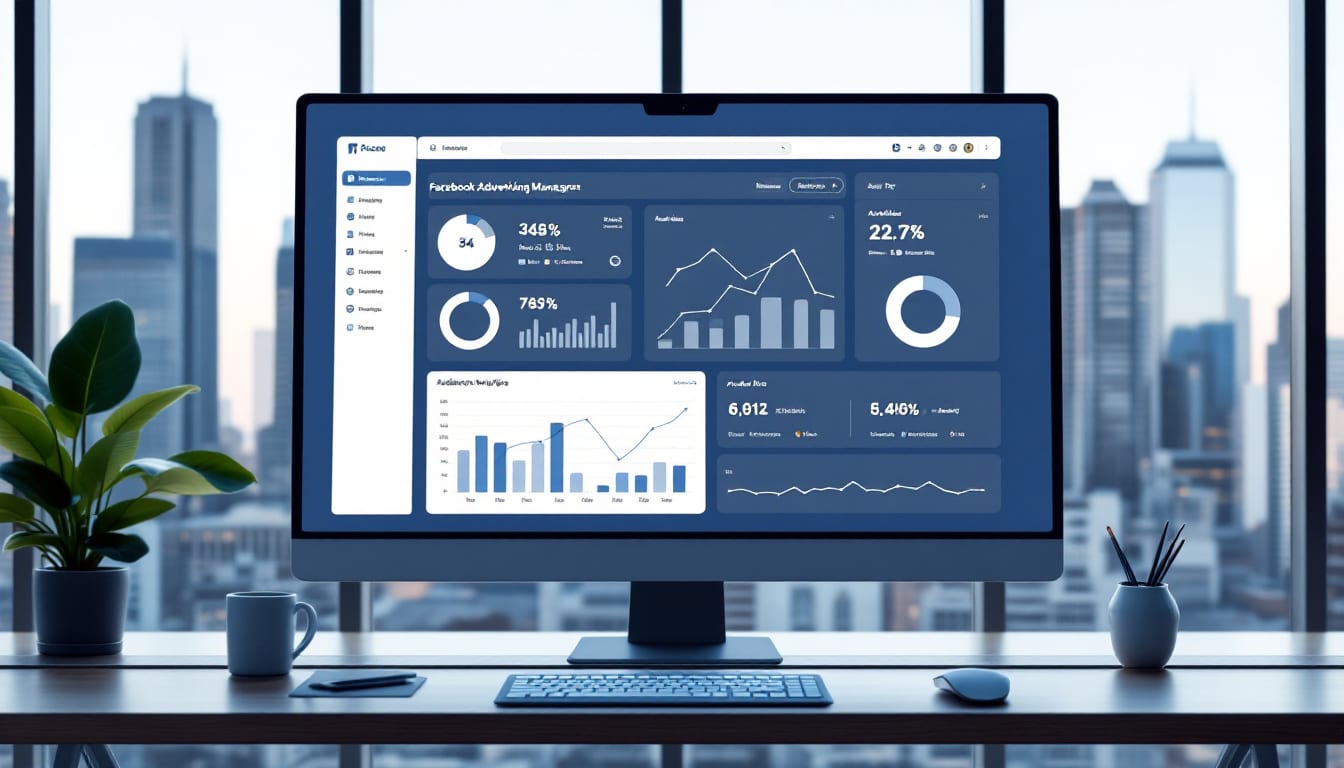
Facebook advertising management is the process of planning, building, launching, and optimising paid campaigns on Meta’s advertising platform — including Facebook, Instagram, and Messenger placements. For agencies, it means managing ad accounts on behalf of clients: handling budgets, audiences, creative, and performance reporting. Done well, it’s one of the highest-use services an agency can offer. Done poorly, it drains account management hours and erodes client trust fast.
- Facebook advertising management covers campaign strategy, audience targeting, creative production, budget allocation, and performance analysis — all within Meta’s Ads Manager platform.
- Agencies that white-label Facebook ad management can offer a full paid social service without hiring in-house media buyers, preserving margins on client retainers of $5,000–$25,000/month.
- Meta’s ad platform reaches more than 3 billion monthly active users, making it the largest paid social channel available to most agency clients.
- The biggest bottleneck for boutique agencies isn’t access to the platform — it’s execution capacity: building campaigns, writing copy, running tests, and reporting results at scale.
- White-label Facebook ad management paired with SEO and content services creates a full-funnel offering that retains clients longer and commands higher monthly retainers.
What Does Facebook Advertising Management Actually Involve?
Facebook advertising management is more than logging into Ads Manager and pressing “Boost Post.” It’s a multi-layered discipline that spans strategy, creative, targeting, testing, and reporting — and each layer requires genuine expertise to execute well. At the campaign level, you’re choosing between awareness, consideration, and conversion objectives. At the ad set level, you’re defining audiences, placements, and budgets. At the ad level, you’re producing creative that stops the scroll.
For agencies, the operational reality looks like this: each client typically needs at least two to three active campaigns running simultaneously, with weekly creative refreshes to prevent ad fatigue, monthly audience reviews, and regular budget reallocation based on performance data. A client spending $5,000/month in ad spend needs roughly five to eight hours of hands-on management per week to maintain results. Multiply that across a book of even five clients and you’re looking at a 25-40 hour weekly commitment — before any strategic work, reporting, or client calls.
That’s the capacity problem most boutique agencies hit. And it’s exactly why white-label execution partners exist.
How Does Facebook’s Ad Platform Work for Agency Clients?
Meta’s Ads Manager gives advertisers access to one of the most sophisticated targeting systems ever built. You can reach audiences by age, location, interests, behaviours, life events, and device type — or build lookalike audiences from your clients’ customer lists and website visitors. The platform also includes a Business Manager structure that lets agencies manage multiple client ad accounts from a single dashboard, with separate billing, permissions, and reporting per account.
According to Meta’s published data, the platform serves more than 3 billion monthly active users across its family of apps. That reach makes Facebook advertising relevant for nearly every category of agency client — from local service businesses to national e-commerce brands to B2B lead generation. The targeting precision is what distinguishes it from broadcast advertising: you can serve an ad to a 35-44 year old homeowner in suburban Brisbane who has recently shown interest in kitchen renovations and has engaged with similar pages in the last 30 days. No media buy in history has offered that level of specificity at that price point.
The practical mechanics matter for agencies. Each client needs their own Business Manager account or must grant agency access to theirs. Pixel installation needs to be verified. Conversion events need to be configured. Catalogues need to be connected for e-commerce clients. None of this is technically complex, but all of it takes time — and all of it sits on the agency’s plate when you’re selling managed services.
What’s the Difference Between Running Ads and Managing Facebook Advertising?
Running ads means publishing a campaign. Managing Facebook advertising means taking accountability for results. The distinction sounds obvious, but it’s where agencies most often under-deliver — and where the best ones build real retention.
Ad management at a professional level includes continuous creative testing (A/B testing headlines, images, video against static, and call-to-action variations), audience segmentation and refinement, frequency management (pulling ad sets when frequency climbs above 2.5 to prevent audience fatigue), bid strategy adjustments based on auction competitiveness, and budget pacing to avoid underspend or overspend against monthly targets. It also includes proactive communication with clients when something isn’t performing — not waiting until the monthly report to flag a CPA that’s drifted 40% above target.
Reporting is its own discipline. Clients care about leads and sales, not impressions. A good Facebook advertising management service translates platform metrics (CPM, CTR, ROAS) into business outcomes (leads generated, cost per acquisition, revenue attributed). That translation — from ad platform data to business language — is often what separates agencies that retain clients for three-plus years from those that churn at month six.
How Can Boutique Agencies Offer Facebook Ad Management Without Hiring Specialists?
White-labelling is the short answer. Partnering with a provider who delivers the execution under your agency’s branding means you can offer Facebook advertising management without recruiting, training, or managing in-house media buyers — who are expensive, hard to find, and immediately create capacity risk when they leave.
A white-label arrangement works like this: you sell and own the client relationship, set the strategy, and conduct client calls. Your white-label partner builds the campaigns, manages the day-to-day optimisation, and produces reporting in your branding. The client sees your agency. You see the margin between what you bill and what you pay. For agencies billing $5,000–$25,000 per client per month, the economics are attractive — especially when white-label execution costs are fixed rather than tied to headcount.
This is exactly the model Agency Stack operates on. We wear your agency’s name badge, interact with your clients as if we’re part of your team, and deliver the execution you’re billing for — at our price, not yours. If you’re evaluating whether to build an in-house team or partner with a white-label provider, the SEO Reseller vs In-House SEO Team comparison covers the tradeoffs in detail — the same logic applies to paid social.
What Targeting Options Matter Most for Client Results?
The answer varies depending on the client’s business model, but three targeting approaches consistently drive results across most categories.
Retargeting audiences — people who’ve visited the client’s website, engaged with their social content, or watched their videos — almost always outperform cold audiences because the trust barrier is lower. Start here when a client has meaningful existing traffic (broadly, more than 1,000 site visitors per month).
Lookalike audiences built from a client’s best customers (top 10% by lifetime value, or completed purchase events) let you scale beyond retargeting without sacrificing relevance. Meta’s algorithm is good at finding similar people when you give it quality seed data. The quality of the seed matters more than the size — 500 verified purchasers beats 5,000 email list subscribers who’ve never bought.
Interest and behaviour targeting has become less precise since iOS 14 privacy changes reduced signal quality, but it remains useful for awareness-stage campaigns and reaching categories where the client has no existing customer data to build from. Don’t rely on it for conversion campaigns if retargeting or lookalike options exist.
One thing agencies often underestimate: creative is a targeting tool. Different creative speaks to different audiences even within the same ad set. Testing radically different creative angles — not just colour variations — often produces more signal than audience segmentation alone.
How Does Facebook Advertising Fit Into a Broader Agency Service Stack?
Facebook advertising works best as part of a connected marketing stack, not as a standalone service. Ad campaigns drive traffic, but what converts that traffic depends on landing page quality, offer clarity, and follow-up sequences. Agencies that pair paid social with SEO, content, and conversion rate optimisation see better client retention — because results compound rather than depending entirely on ad spend staying on.
According to HubSpot’s marketing research, businesses that combine paid advertising with organic content see meaningfully higher lead volumes than those relying on either channel alone. That’s not surprising — paid ads bring immediate visibility while organic search and content build durable authority over time. For agency clients, the pitch is straightforward: your Facebook ads get people to the site; your SEO and content make sure they trust what they find when they arrive.
For boutique agencies, offering this connected stack requires execution capacity across multiple disciplines simultaneously. That’s where tools and white-label partnerships become essential rather than optional. If you’re looking at how to systematise the operational side — managing client reporting, campaign tools, and workflow across a growing book of business — the marketing agency software guide covers the stack most agency operators are using in 2026.
What Should Agencies Charge for Facebook Advertising Management?
Pricing for Facebook advertising management typically follows one of three models: a flat monthly retainer, a percentage of ad spend, or a performance-based fee. Each has tradeoffs, and the right model depends on your agency’s cost structure and the client’s ad spend level.
Flat retainers work well when ad spend is relatively stable and the management workload is predictable. Percentage-of-spend models (typically 10–20% of monthly ad spend) align agency incentives with client investment levels, but they create variable income that complicates forecasting. Performance-based fees sound attractive to clients but shift risk onto the agency and are hard to model before a campaign has run.
Most agencies billing $5,000–$25,000/month per client use a retainer-plus-percentage hybrid: a base management fee that covers account setup, strategy, and reporting, plus a percentage of spend above a defined threshold. This gives the agency predictable base income while participating in the upside as clients scale. Whatever model you choose, be explicit with clients about what’s included — creative production, landing page builds, and reporting frequency are common scope disputes in paid social engagements.
Frequently Asked Questions
What is Facebook advertising management?
Facebook advertising management is the ongoing process of planning, building, optimising, and reporting on paid campaigns within Meta’s Ads Manager platform. It covers campaign strategy, audience targeting, creative testing, budget management, and performance analysis — typically handled by an agency or specialist on behalf of a business client.
How much does it cost to have an agency manage your Facebook ads?
Agency pricing for Facebook ad management typically ranges from $1,000 to $5,000 per month for small accounts, and higher for larger ad spend or multi-market campaigns. The answer varies based on ad spend level, campaign complexity, and whether creative production is included. Most established agencies charge either a flat retainer, a percentage of ad spend (10–20%), or a hybrid of both.
What does a Facebook advertising manager do on a daily basis?
Day-to-day responsibilities include monitoring campaign performance against KPIs, adjusting bids and budgets based on results, reviewing ad frequency to prevent audience fatigue, and flagging creative that’s declining in performance. On a weekly basis, they’re typically running creative tests, refreshing ad copy or visuals, and pulling performance data for client reporting.
Can boutique agencies offer Facebook advertising without hiring in-house specialists?
Yes — white-label execution partnerships are specifically built for this. An agency can sell and own the client relationship while a white-label provider handles the campaign builds, optimisation, and reporting under the agency’s branding. This is how many agencies offer paid social services without the overhead of recruiting and retaining in-house media buyers.
What’s the biggest mistake agencies make with Facebook ad management?
Treating setup as the deliverable rather than performance. Launching a campaign is the beginning, not the outcome — and agencies that don’t build ongoing optimisation, creative refresh cycles, and proactive reporting into their service model tend to churn clients at month three or four when initial results plateau.
How has iOS 14 affected Facebook advertising for agencies?
Apple’s App Tracking Transparency framework significantly reduced the quality of conversion data flowing from iOS devices into Meta’s platform, making pixel-based attribution less reliable. Agencies have adapted by prioritising first-party data (customer lists, CRM audiences), using Meta’s Conversions API to supplement browser-based pixel tracking, and shifting reporting focus from last-click attribution to blended metrics that account for data gaps.
What reporting should agencies provide for Facebook advertising clients?
At minimum, clients should receive monthly reports covering spend, impressions, click-through rate, cost per result (lead or purchase), and return on ad spend where applicable. Strong reporting also includes creative performance breakdowns, audience insights, and a narrative explaining what changed, why, and what’s planned next. Reporting in business language — leads and revenue, not just platform metrics — is what separates agencies that retain clients long-term.
How does Facebook advertising work alongside SEO for agency clients?
Facebook ads drive immediate traffic and conversions; SEO builds durable organic visibility over months. Combined, they create a full-funnel presence — paid brings people in while organic builds authority that lowers cost-per-acquisition over time. Agencies offering both services typically see stronger client retention because results from one channel reinforce the other, making the overall engagement harder to walk away from.
For expert Whitelabel Digital Marketing Services guidance in the USA, contact Agency Stack.
Written by the Agency Stack team — white-label digital marketing professionals supporting boutique agencies across the USA and beyond.