
Facebook Advertising Management for Agencies: How to Deliver Results at Scale in 2026
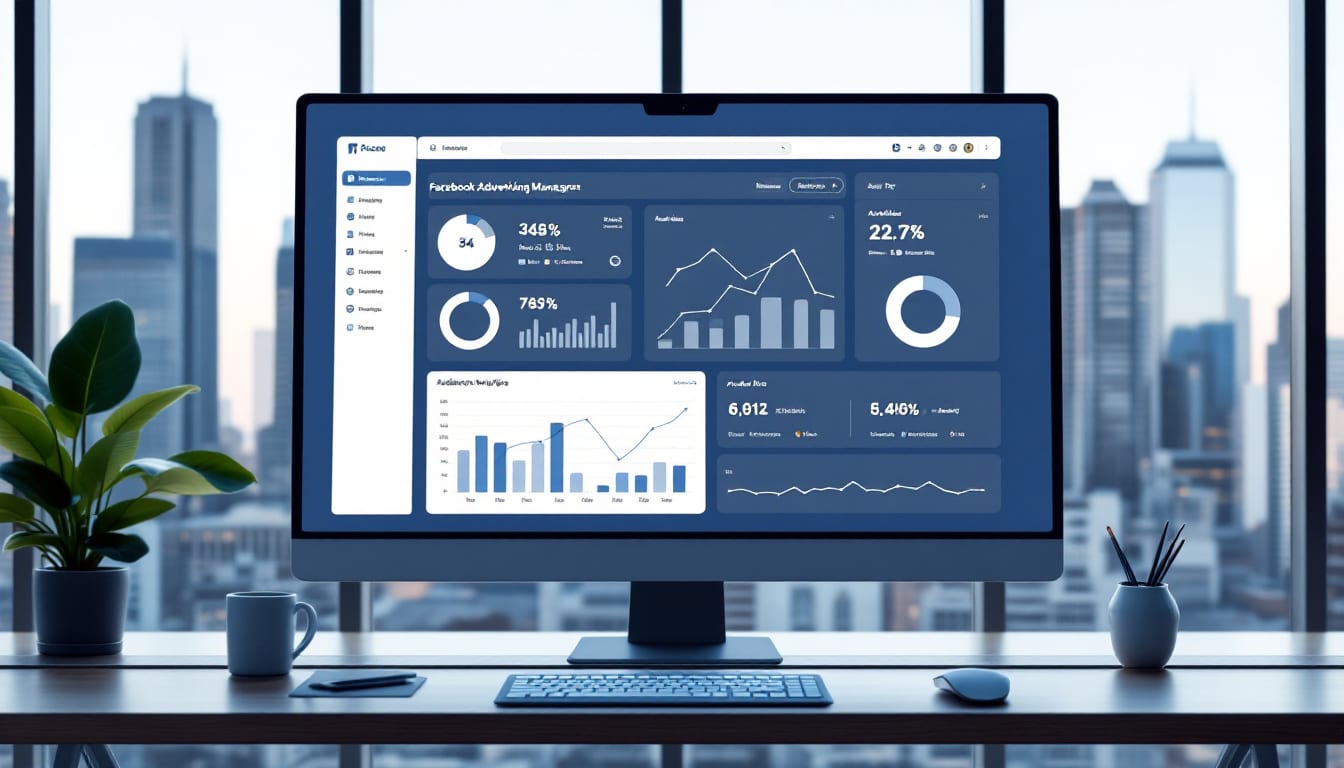
Facebook advertising management is the process of planning, building, optimising, and reporting on paid ad campaigns across Meta’s platforms — Facebook, Instagram, and Messenger — to drive measurable business outcomes for clients. Done well, it combines audience targeting, creative testing, budget pacing, and conversion tracking into a repeatable system. For agencies, the real challenge isn’t running one campaign — it’s delivering consistent results across dozens of clients without burning out your team.
- Facebook advertising management covers the full campaign lifecycle: strategy, audience research, ad creation, budget allocation, A/B testing, and performance reporting.
- Meta’s advertising platform reaches over 3 billion monthly active users globally, making it one of the largest paid media channels available to small and mid-sized businesses.
- Agencies managing Facebook ads on behalf of clients face a capacity problem — delivering consistent quality across 10, 20, or 50 accounts requires either a large in-house team or a scalable white-label partner.
- AI-driven campaign management is reshaping what agencies can offer — autonomous optimisation, audience modelling, and creative testing now happen at speeds no human team can match manually.
- White-label Facebook advertising management lets boutique agencies bill for premium execution without hiring specialist staff, protecting margins while growing client revenue.
What Does Facebook Advertising Management Actually Involve?
Facebook advertising management is more than switching on a campaign and checking it weekly. It’s a structured, ongoing process that demands strategic input at every stage — from audience segmentation to ad creative to conversion optimisation. The scope is wide, and that’s exactly why so many agencies struggle to scale it.
At the campaign level, a manager is making decisions about campaign objectives (traffic, leads, purchases, brand awareness), audience targeting (custom audiences, lookalikes, interest-based), placements (feed, stories, reels, Messenger), and bid strategy. Each of these decisions compounds. A wrong objective choice can mean Meta’s algorithm optimises for the wrong behaviour entirely — burning budget on clicks that never convert.
At the ad level, management involves creative testing (static images vs. video vs. carousel), copywriting, call-to-action selection, and landing page alignment. The creative is arguably the biggest lever in 2026. Meta’s machine learning has become sophisticated enough that the algorithm will find your audience — but it can only work with the creative you give it. Bad creative means bad results, regardless of how well the targeting is structured.
Reporting is where many agencies fall short. Clients want to see what their money is producing — CPL (cost per lead), ROAS (return on ad spend), CPA (cost per acquisition) — and they want that data in plain language, not Meta’s native dashboard. Building weekly or monthly reports across multiple clients is a serious time investment if it’s done manually.
And then there’s the ongoing optimisation work: adjusting budgets based on performance, refreshing creative to combat ad fatigue, testing new audiences, scaling what’s working. This is where experienced management earns its keep — and where under-resourced agencies start cutting corners.
Why Do Agencies Struggle to Scale Facebook Ad Management?
The bottleneck is almost always people. Running Facebook ads well requires skill — understanding Meta’s algorithm, knowing how to read campaign data, and having the creative judgment to know when a campaign needs a new angle versus a budget increase. That skill doesn’t scale automatically when you win a new client.
Most boutique agencies start by hiring one or two paid media specialists. That works fine up to a point. But when your client roster grows past 10 or 15 accounts, that same team is stretched thin. Quality slips. Response times slow. The junior person who used to support starts making decisions they’re not ready for. You’ve seen it — or you’ve lived it.
The alternative — hiring ahead of growth — is expensive and risky. A senior paid social specialist in Australia costs $80,000–$110,000 per year in salary alone, before tools, training, and management overhead. If client growth stalls or a major account churns, you’re carrying fixed cost with shrinking revenue.
This is the capacity trap. And it’s why more agencies are turning to white-label execution partners rather than trying to staff every function in-house. For a deeper look at how this decision plays out financially, the comparison between SEO Reseller vs In-House SEO Team is instructive — the same logic applies directly to paid media.
What Should You Look for in a Facebook Ads Management Partner?
Not all white-label partners are equal, and the wrong one will create more problems than it solves. The answer varies depending on your client mix, your pricing model, and how much oversight you want to maintain — but there are a few non-negotiables.
First, transparency. Your white-label partner should give you clean, brandable reporting you can put in front of clients without editing. If you’re spending two hours reformatting reports every week, that’s not execution support — that’s just offshoring the admin.
Second, AI-driven execution. In 2026, the agencies winning on Meta are using AI to automate the routine optimisation work — budget reallocation, audience refresh triggers, creative fatigue detection — so human attention can focus on strategy. If a partner is still doing this manually across 50 accounts, they’re already behind.
Third, genuine white-label integration. You want a partner who operates under your agency’s name — communicating with your clients as if they’re part of your team, not as a third-party vendor your client has never heard of. This protects the client relationship and keeps your agency positioned as the primary expert. That’s exactly how Agency Stack is built — dedicated account managers who wear your badge and interact with your clients as if they’re one of you.
Fourth, proof of execution. Your clients want evidence, not promises. The LinkedIn outreach and partnership pitches that worked two years ago are meeting softer conversion rates now — because agencies have been burned by partners who over-promise. What converts today is showing AI execution in action: real campaign data, live dashboards, actual results from comparable clients.
How Does AI Change Facebook Advertising Management?
AI doesn’t replace the strategic thinking — but it handles the volume that used to require a team. That’s the shift worth understanding.
Meta’s own algorithm is already doing significant AI-driven work: Advantage+ campaigns use machine learning to optimise targeting, placement, and creative combinations automatically. But the AI layer that matters most for agencies sits at the account management level — the systems that monitor performance across dozens of accounts simultaneously, flag anomalies, trigger budget adjustments, and surface optimisation recommendations without a human checking dashboards all day.
According to WordStream’s Facebook advertising research, advertisers who actively test multiple creative variants consistently achieve lower CPAs than those running static campaigns. AI makes that testing systematic — running controlled experiments across creative variables at a scale that a single media buyer simply can’t manage manually.
For agencies, the practical implication is this: you can now offer clients sophisticated campaign management — real-time optimisation, audience modelling, creative testing — without building a specialist team to deliver it. The AI execution layer does the heavy lifting. Your team stays focused on client relationships, strategy, and growth.
This is also where content production becomes a paid media advantage. Strong ad creative starts with strong content — and agencies that have a consistent content production capability have a meaningful edge in keeping campaigns fresh. If content production is a gap in your current offering, it’s worth exploring how marketing agency software can systematise that process alongside your paid media delivery.
What Does Effective Facebook Ad Campaign Structure Look Like?
Campaign structure is where the technical knowledge separates good managers from average ones. Meta’s ad account has three levels — campaign, ad set, and ad — and decisions made at each level interact with each other in ways that aren’t always obvious.
At the campaign level, you’re choosing the objective that tells Meta’s algorithm what outcome to optimise for. Awareness, traffic, engagement, leads, app promotion, and sales are the main categories. Choosing the wrong objective is one of the most common errors — an e-commerce brand running a traffic campaign, for example, will get clicks but not necessarily buyers, because the algorithm optimises for what you tell it to.
At the ad set level, you’re defining the audience, placements, schedule, and budget. In 2026, many campaign managers are leaning toward broader audiences and letting Meta’s machine learning do the granular targeting work — because the algorithm has access to signals (behavioural, contextual, cross-device) that no manually built audience can replicate. This is a shift from the hyper-segmented targeting approach that dominated five years ago.
At the ad level, creative and copy are the main variables. Testing three to five creative variants per ad set is standard practice — enough variation to generate learning, not so much that budget gets diluted. Creative should be refreshed every four to six weeks to avoid frequency-driven fatigue, which shows up as declining CTR and rising CPM.
How Do You Report Facebook Ad Results to Clients?
Client reporting is the part of Facebook ad management that directly affects client retention — and it’s where many agencies underinvest. Clients don’t just want to know what their money spent; they want to understand what it produced and what’s coming next.
The metrics that matter most depend on the campaign objective. For lead generation: CPL, lead volume, lead quality (if you have CRM integration). For e-commerce: ROAS, CPA, revenue attributed. For brand awareness: reach, frequency, CPM. Mixing these up — reporting ROAS to a client running an awareness campaign — signals that you’re not paying attention.
According to Sprout Social’s research on Facebook marketing benchmarks, average click-through rates and cost-per-click vary significantly by industry — which means benchmarking your client’s performance against their specific vertical, not generic platform averages, is critical for setting realistic expectations.
Good reporting tells a story: here’s what we tested, here’s what we learned, here’s what we’re doing next. That narrative builds confidence — and confident clients don’t churn.
Frequently Asked Questions
What is Facebook advertising management?
Facebook advertising management is the end-to-end process of creating, running, optimising, and reporting on paid ad campaigns across Meta’s platforms — Facebook, Instagram, and Messenger. It includes audience targeting, creative development, budget management, performance analysis, and ongoing campaign optimisation to achieve a client’s specific business objectives.
How much does it cost to have an agency manage Facebook ads?
Agency fees for Facebook ad management typically range from $1,000 to $5,000 per month for small to mid-sized accounts, on top of the ad spend itself. The answer varies based on account complexity, the number of campaigns running, and the level of creative support included. Some agencies charge a percentage of ad spend (commonly 10–20%) rather than a flat fee.
What’s the difference between running Facebook ads yourself and using a management service?
Running ads yourself means you’re responsible for every decision — strategy, targeting, creative, optimisation — without specialist experience. A management service brings structured processes, platform expertise, and ongoing optimisation that typically produces better results per dollar spent. For agencies specifically, a white-label management service adds execution capacity without requiring in-house hiring.
How long does it take to see results from Facebook advertising?
Most campaigns need a learning phase of one to two weeks before Meta’s algorithm has enough data to optimise effectively — so results in the first fortnight are rarely representative. Meaningful performance data typically emerges in weeks three to six, depending on budget and campaign volume. Consistent, improving results over a 60–90 day period is a realistic expectation for well-managed campaigns.
What budget do clients need for Facebook advertising to be effective?
The minimum effective ad spend depends heavily on the objective and the audience size. For lead generation, $1,500–$3,000 per month is typically the floor for generating enough data to optimise. E-commerce campaigns generally need more — $3,000–$10,000+ monthly — to produce statistically reliable ROAS data. Below these thresholds, the algorithm’s learning phase is too slow to be useful.
Can Facebook advertising management be white-labelled for agencies?
Yes — white-label Facebook ad management is a common model where a specialist partner delivers campaign strategy, execution, and reporting under the agency’s branding. The end client sees only the agency’s name and communication style; the white-label partner operates invisibly. This allows boutique agencies to offer paid media services without hiring specialist staff.
How does AI improve Facebook advertising management for agencies?
AI enables continuous optimisation across multiple client accounts simultaneously — monitoring performance signals, adjusting budgets, detecting creative fatigue, and surfacing recommendations in real time. This is work that would require a large specialist team to do manually. For agencies, AI-driven management means better client outcomes at lower delivery cost, which protects margins as the client base scales.
What should agencies look for when choosing a Facebook ads white-label partner?
The three most important criteria are: genuine white-label integration (the partner communicates as your team, not as a third party), AI-driven execution that scales across accounts without manual bottlenecks, and transparent reporting that’s brandable and client-ready without reformatting. Proof of results from comparable clients — real campaign data, not pitch decks — is the standard conversion tool in 2026.
For expert Whitelabel Digital Marketing Services guidance in the USA, contact Agency Stack.
Written by the Agency Stack team — white-label digital marketing professionals supporting boutique agencies across the USA and beyond.